Can a Pogo pin be used as an RF antenna?
The Pogo pin can be used as an RF antenna. Pogo pin, that is, a small elastic needle with a spring, referred to as a spring needle, not only has basic functions such as charging and mechanical fixing, but also plays an important role in the transmission of radio frequency (RF) signals. The following is a detailed analysis of the Pogo pin's use as an RF antenna:
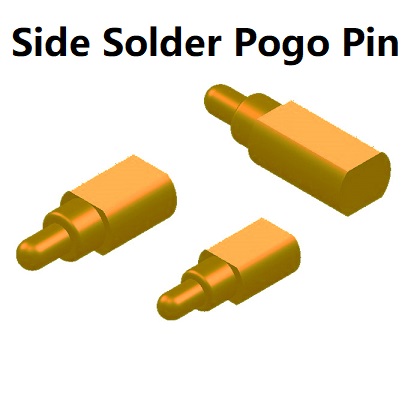
1. Feasibility of Pogo pin as RF antenna
1. Signal transmission capability
Due to its unique spring construction, the
Pogo pin is able to provide a stable electrical connection upon contact, which is essential for the transmission of RF signals. The elasticity of the spring ensures good contact between the needle and the receiving end, reducing signal loss and interference.
• Pogo pin has smaller distributed capacitance and distributed inductance in high frequency bands, which facilitates impedance matching, reduces signal reflection, and improves signal transmission efficiency.
Step 2 Be flexible
• The design of the Pogo pin allows for a high degree of flexibility across different devices and application scenarios. For example, in a metal frame design, the Pogo pin can be more flexible in signal transmission, making the antenna radiation further away from the motherboard and its components, thereby improving antenna performance.
Pogo Pins also support right-angle (horizontal) configurations and floating designs, which further increases their applicability in a variety of devices.
3. Space utilization rate
The Pogo pin is small, lightweight and takes up little space, which makes it ideal for RF antennas in space-constrained devices such as smartphones, tablets, etc. In these devices, Pogo pins can maximize the use of limited space without sacrificing antenna performance.
Second, Pogo pin as an application example of RF antenna
1. Smartphones
In smartphones, the Pogo pin is often used as an interface for wireless charging, but can also be used as part of an RF antenna to receive and send wireless signals. For example, some smartphones have integrated Pogo pins in the metal bezel as part of the antenna to improve signal reception quality.
2. Wearable devices
• In wearable devices such as smart watches and smart bands, Pogo pins can also be used as RF antennas. These devices are typically small and limited in space, and the Pogo pin's compact design makes it an ideal antenna choice.
3. Other applications
In addition to smartphones and wearables, Pogo pins can also be used in other applications that require RF signal transmission, such as wireless headsets, wireless chargers, iot devices, etc.
Third, Pogo pin as an RF antenna advantage
1. Stable performance
• The spring structure of the Pogo pin provides a stable electrical connection upon contact, ensuring stable transmission of the RF signal. At the same time, its good impedance matching characteristics can reduce signal reflection and interference, and improve signal quality.
2. Easy to integrate
• Pogo pin is small, lightweight and easy to integrate with other electronic components. This makes it ideal for RF antennas in a variety of devices, especially in space-constrained devices.
3. Low cost
• Pogo Pins are less costly than other types of RF antennas. This makes it ideal for mass production, helping to reduce product costs and improve market competitiveness.
Four, the use of Pogo pin as RF antenna precautions
1. Design optimization
• Adequate design optimization is required when using Pogo pins as RF antennas. This includes selecting parameters such as the right needle length, diameter and spring stiffness to ensure maximum antenna performance.
2. Material selection
• The material choice of Pogo pin also has an important impact on antenna performance. For example, the materials of needles and syringes should have good electrical conductivity and mechanical strength to ensure the stability and reliability of signal transmission.
3. Environmental adaptability
• When the Pogo pin is used as an RF antenna, its environmental adaptability needs to be considered. For example, in harsh environments such as high temperature, low temperature, and humidity, it is necessary to ensure the stability and reliability of the Pogo pin to avoid signal interference and failure.
V. Summary
To sum up, Pogo pins can be used as RF antennas and play an important role in a variety of application scenarios such as smartphones and wearable devices. Its unique spring structure, flexibility, high space utilization and low cost make it an ideal choice for RF antennas. However, it is necessary to pay attention to design optimization, material selection and environmental adaptability during use to ensure maximum antenna performance and product reliability.

 WhatsApp:+8613652508770