How to solve the Pogo Pin signal interference problem ?
To solve the problem of Pogo Pin signal interference, it is necessary to start from many aspects, including design optimization, material selection, manufacturing process, maintenance and environmental control. The following is a detailed analysis of the problem of Pogo Pin signal interference:
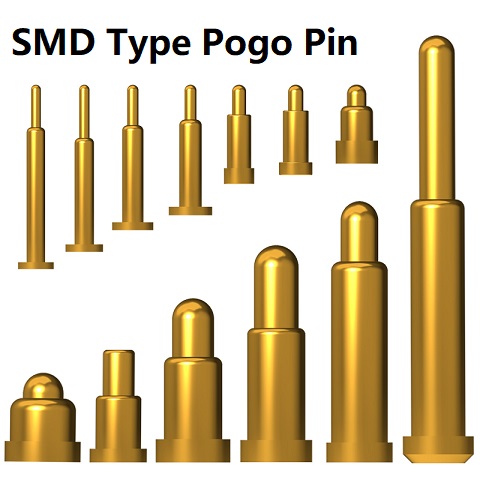
First, design optimization
1. Structure layout
• Reduce sources of interference: When designing
Pogo Pin connectors, the components and circuits that may cause interference should be minimized. For example, the high-frequency signal line and the low-frequency signal line are arranged separately to avoid mutual interference.
• Optimized grounding design: Good grounding design is the key to reducing signal interference. Electromagnetic interference and electrostatic interference can be effectively suppressed through reasonable grounding layout.
2. Needle and copper wall contact design
• Most Pogo Pin connector needles are in contact with the copper wall below at an Angle. In order to ensure the stability of signal transmission, it is necessary to keep the inner wall of the copper sleeve smooth to reduce contact resistance and signal reflection.
• If the design is non-bevelled and the bottom is flat, most of the current will need to be channelled through the spring, which requires higher demands on the spring. Therefore, the current load and the bearing capacity of the spring should be fully considered in the design.
Second, material selection
1. Conductive materials
• Select materials with good electrical conductivity as the needle and needle tube of Pogo Pin, which can reduce the contact resistance and improve the signal transmission efficiency.
At the same time, the hardness and durability of the conductive material are also factors that need to be considered to ensure that the Pogo Pin maintains stable performance in long-term use.
2. Insulation materials
• The choice of insulation material is equally important to reduce signal interference. Materials with low dielectric constant and good insulation performance should be selected as the insulation layer of Pogo Pin to reduce electromagnetic leakage and electrostatic interference.
3. Manufacturing process
1. Precision machining
• The manufacture of Pogo pins requires high-precision processing equipment and processes. Precision machining methods such as turning, milling and grinding ensure the dimensional accuracy and surface finish of the Pogo Pin, reducing contact resistance and signal reflection.
2. Clean and dispose
During the manufacturing process, Pogo pins should be rigorously cleaned to remove oil, dust and other contaminants from the surface. These contaminants can cause poor contact and signal interference.
4. Use and maintenance
1. Install it correctly
• When installing the Pogo Pin connector, it should be operated according to the requirements of the product manual to ensure that the needle and the copper wall are in correct contact to avoid deflection or loosening.
2. Get regular checkups
• Check and maintain Pogo Pin connectors regularly to find and deal with problems such as poor contact, loosening or damage in a timely manner. This can effectively reduce signal interference and failure rates.
3. Avoid mechanical damage
• During use, excessive mechanical pressure or impact force should be avoided on the Pogo Pin connector, so as not to cause the needle to bend or break, affecting the stability of signal transmission.
5. Environmental control
1. Electromagnetic environment
• Pogo Pin connectors should be kept away from strong electromagnetic fields and RF interference sources, such as motors, transformers, and high-frequency devices. If it cannot be avoided, shielding measures should be taken to reduce electromagnetic interference.
2. Temperature and humidity control
• Temperature and humidity also have a certain impact on the performance of Pogo Pin connectors. Keep the ambient temperature and humidity of the connector within the appropriate range to avoid poor contact or signal interference caused by too high or too low temperature and humidity.
6. Specific case analysis
Take the Pogo Pin stuck in a company's charging base product (stuck pressing down or unable to bounce back after pressing hard) as an example, the root cause of the problem is that the flux soiled inside the spring needle and caused poor sticking. To address this issue, the company has taken the following measures:
1. Improve welding process
• Optimize the welding process to reduce the amount of flux used and ensure that flux is thoroughly cleaned after welding.
2. Strengthen staff training
• Train operators to improve their understanding and operational level of welding process and cleaning process, and reduce the problem of flux residue caused by improper operation.
3. Introduce automation equipment
• Consider the introduction of automated welding and cleaning equipment to improve production efficiency and product quality stability, and reduce the impact of human factors on product quality.
Vii. Summary
To solve the problem of Pogo Pin signal interference, it is necessary to start from many aspects such as design optimization, material selection, manufacturing process, maintenance and environmental control. By comprehensively considering these factors and taking effective measures, the signal interference problem can be effectively reduced and the performance stability and reliability of Pogo Pin connectors can be improved. In practical applications, corresponding solutions should be developed according to the specific product and use environment, and constantly optimized and improved.

 WhatsApp:+8613652508770