
Home > News

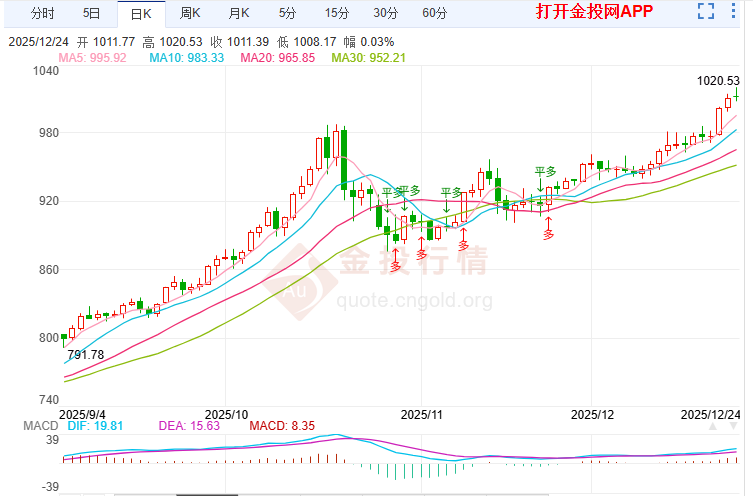
Pogo pins typically employ a surface treatment process of nickel plating followed by gold plating. Gold plating primarily serves to prevent oxidation and reduce contact resistance to improve performance. In December 2025, gold prices were indeed high, which increased the costs associated with gold plating.
The main body of Pogo pins is mostly made of 3604 copper, with internal springs made of stainless steel. These basic materials already have a stable cost base. Furthermore, its internal structure is not a single component; the pin tip has various structures such as flat bottom, milled edges, and reverse holes, requiring customization based on different impedance requirements. Different structures result in significant differences in processing difficulty and material waste. Additionally, its size also affects cost. For example, when the diameter is less than the standard 1.5mm or the length exceeds 10mm, the amount of copper and plating materials used increases, and the processing difficulty rises, directly increasing the price.
Pogo pins are precision-machined magnetic connectors, requiring extremely high production precision. Besides surface plating processes like nickel and gold, Pogo pins for special applications such as high-frequency signal transmission require specialized structural designs. Furthermore, the initial investment in automated production lines is substantial, and multiple rounds of quality inspection are necessary to ensure product consistency and reliability. These process costs are all factored into the product price.
Many electronic devices, such as smart wearables and capacitive pens, have personalized requirements for Pogo pin dimensions, current carrying capacity, etc. Non-standard customization requires additional investment in R&D and process adjustments, naturally increasing the price. In addition, with the development of consumer electronics and new energy industries, the market demand for Pogo pins continues to increase, while the number of manufacturers with mature production systems and quality control capabilities is limited. This supply-demand imbalance for some high-end customized products will also keep their prices at a high level.
While the overall amount of gold plating used in Pogo pins is small, the plating thickness is directly proportional to the amount of gold consumed. Common Pogo pin gold plating thicknesses include 1µm, 3µm, 5µm, and 10µm. Each increase in thickness corresponds to a greater amount of gold used per unit. Since gold is a precious metal, its market price is directly factored into production costs. The thicker the plating, the higher the proportion of gold cost, and consequently, the higher the final selling price.
Contact: Jerry_shi
Phone: +86-13652508770
Tel: +86-13652508770
Email: [email protected]
Add: ChanFu Dong Road,XiaoBian Village, ChangAn Town,DongGuan City,GuangDong,China
 WhatsApp:+8613652508770