What is the best surface coating for Pogo pins?
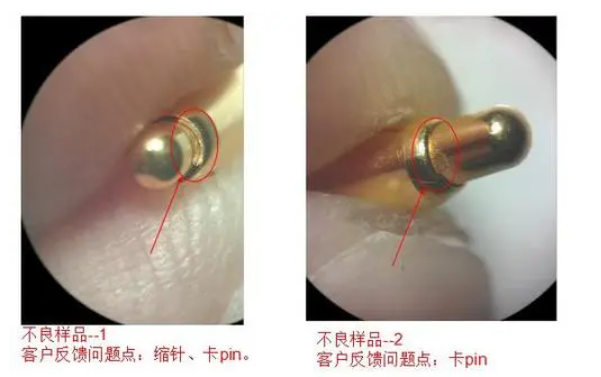
Pogo pins—spring-loaded connectors critical to reliable electrical contact in devices ranging from smartphones to automotive sensors—depend heavily on surface coatings to perform their core functions: ensuring low contact resistance, resisting corrosion, and withstanding mechanical wear. The "best" coating, however, is not a one-size-fits-all solution; it depends on the Pogo pin’s application environment (e.g., consumer electronics vs. industrial machinery), mechanical demands (e.g., insertion cycles), and electrical requirements (e.g., high-frequency signal transmission). This article breaks down the most common Pogo pin coatings, their performance tradeoffs, and how to select the optimal option for specific use cases.
Before comparing coatings, it is essential to define the metrics that determine their effectiveness. The best Pogo pin coating must balance four critical factors:
-
Electrical Conductivity: Low contact resistance (typically <50mΩ) is non-negotiable for efficient current/signal transmission. Coatings with high electrical conductivity minimize voltage drops and signal attenuation.
-
Corrosion Resistance: Pogo pins often operate in humid, salty, or chemically exposed environments (e.g., marine equipment, industrial cleanrooms). Coatings must form a barrier against oxidation, rust, and chemical degradation to extend service life.
-
Wear Resistance: Repeated insertion/retraction cycles (e.g., 10,000+ cycles for consumer electronics) cause friction between the Pogo pin’s plunger and barrel. A durable coating prevents material wear, which would otherwise increase contact resistance over time.
-
Cost-Effectiveness: High-performance coatings (e.g., gold) are expensive. The best coating delivers sufficient performance at a cost aligned with the application’s budget—there is no need for a premium coating in low-stress, short-lifespan devices.
No single coating excels in all scenarios, but three options dominate the industry: gold (Au), nickel (Ni), and tin (Sn). Each has unique strengths that make it suitable for specific applications.
Gold is widely regarded as the gold standard (pun intended) for Pogo pin
magnetic connector coatings, thanks to its exceptional electrical and chemical properties. It is typically applied as a thin layer (0.5–5μm) over a nickel underlayer—nickel improves adhesion to the base material (e.g., brass, phosphor bronze) and prevents gold from diffusing into the base metal (a process that would degrade conductivity).
-
Superior Electrical Conductivity: Gold has one of the lowest resistivities (2.44×10⁻⁸ Ω·m) among metals, ensuring minimal contact resistance even in high-frequency applications (e.g., 5G modules, RF sensors). This makes it ideal for Pogo pins transmitting high-speed data, where signal integrity is critical.
-
Excellent Corrosion Resistance: Gold is chemically inert and does not oxidize in air or react with most acids/bases. This makes it perfect for harsh environments, such as medical devices (exposed to bodily fluids) or marine electronics (exposed to saltwater), where corrosion would quickly render other coatings useless.
-
Low Friction & Wear Resistance: Gold’s smooth surface reduces friction between the Pogo pin’s plunger and barrel, extending the number of reliable insertion cycles (often up to 100,000+ cycles). This is a key advantage for devices requiring long-term durability, such as industrial robots or automotive ADAS (Advanced Driver Assistance Systems) sensors.
-
High Cost: Gold is significantly more expensive than nickel or tin. A 2μm gold coating can increase a Pogo pin’s cost by 30–50%, making it impractical for low-budget, high-volume consumer devices (e.g., disposable wearables) where cost is a primary concern.
-
Thickness Sensitivity: Thin gold layers (<0.5μm) are prone to "pinholes"—tiny gaps that expose the underlying nickel or base metal to corrosion. This requires strict quality control during plating to ensure uniform thickness, adding to manufacturing complexity.
High-reliability applications where performance justifies cost: medical devices (e.g., glucose monitors), automotive safety systems (e.g., TPMS sensors), high-frequency electronics (e.g., 5G routers), and industrial automation equipment (e.g., PLC connectors).
Nickel is a versatile coating often used as a standalone option or as an underlayer for gold. It is applied in thicker layers (5–10μm) than gold, leveraging its mechanical strength and corrosion resistance.
-
Exceptional Wear Resistance: Nickel is harder than gold or tin (Vickers hardness: ~150 HV for electroless nickel vs. ~25 HV for gold), making it highly resistant to friction and mechanical damage. This is ideal for Pogo pins subjected to rough handling, such as portable barcode scanners or construction equipment sensors, where the pin may encounter dust, debris, or physical impacts.
-
Good Corrosion Resistance: While nickel oxidizes in air (forming a thin nickel oxide layer), this oxide layer is stable and acts as a barrier against further corrosion. This makes nickel suitable for indoor, low-humidity environments (e.g., office printers, home appliances) where exposure to harsh chemicals is minimal.
-
Cost-Effectiveness: Nickel is 10–20 times cheaper than gold, making it a popular choice for high-volume, mid-performance applications. It also adheres well to most base metals (brass, copper), simplifying the plating process and reducing manufacturing costs.
-
Higher Contact Resistance: Nickel’s resistivity (6.99×10⁻⁸ Ω·m) is nearly three times that of gold, leading to higher contact resistance (~100–200mΩ). This makes it unsuitable for high-frequency signal transmission or low-power devices (e.g., IoT sensors), where voltage drops could disrupt functionality.
-
Oxide Layer Issues: The thin nickel oxide layer formed on the surface can increase contact resistance over time, especially in humid environments. Unlike gold, nickel cannot maintain consistent conductivity for decades—its performance degrades after 2–5 years in harsh conditions.
Mid-range applications prioritizing durability and cost: office equipment (e.g., printer connectors), home electronics (e.g., smart speaker charging pins), and light-industrial devices (e.g., temperature sensors in HVAC systems).
Tin is the most economical coating for Pogo pins, applied in layers of 3–8μm. It is often used in applications where cost is the primary driver and performance requirements are modest.
-
Ultra-Low Cost: Tin is significantly cheaper than nickel or gold, making it ideal for disposable or low-cost devices (e.g., single-use medical test kits, budget wireless earbuds) where the Pogo pin’s lifespan is short (a few hundred cycles).
-
Good Solderability: Tin has excellent solderability, which is a benefit if the Pogo pin needs to be soldered directly to a PCB. This simplifies assembly for manufacturers producing low-volume, custom devices.
-
Non-Toxicity: Unlike some other metals (e.g., lead), tin is non-toxic, making it compliant with regulatory standards (e.g., RoHS) for consumer electronics and medical devices.
-
Poor Corrosion Resistance: Tin oxidizes rapidly in humid environments, forming a thick, brittle tin oxide layer that drastically increases contact resistance (often >500mΩ after 6–12 months). It also reacts with sulfur-containing gases (common in industrial settings) to form "tin whiskers"—tiny metal filaments that can cause short circuits.
-
Low Wear Resistance: Tin is soft (Vickers hardness: ~10–15 HV), so it wears quickly under repeated insertion cycles. Most tin-coated Pogo pins fail after 1,000–5,000 cycles, making them unsuitable for long-term use.
-
High Friction: Tin’s rough surface increases friction between the plunger and barrel, leading to "sticking" or jamming in devices with frequent movement (e.g., robotic arms).
Low-cost, short-lifespan applications: disposable medical devices (e.g., COVID-19 test kits), budget consumer electronics (e.g., entry-level smartwatches), and prototype devices where performance is not critical.
For Pogo pins operating in extreme environments, standard coatings may not suffice. Two specialty options address unique challenges:
Palladium (Pd) is a rare metal with corrosion resistance comparable to gold but at a lower cost. Gold-plated palladium combines a thick palladium underlayer (2–3μm) with a thin gold top layer (0.1–0.5μm). This coating offers:
-
Corrosion resistance suitable for marine or chemical environments;
-
Lower cost than pure gold;
-
High conductivity for high-frequency signals.
It is often used in aerospace electronics (e.g., satellite sensors) and oil/gas industry equipment, where reliability in extreme conditions is critical.
Electroless nickel coatings infused with PTFE (Teflon) particles create a self-lubricating surface. This coating excels in:
-
Reducing friction (ideal for Pogo pins with high insertion cycles, such as industrial robots);
-
Resisting chemical attack (suitable for laboratory equipment exposed to acids);
-
Maintaining low contact resistance over time.
The tradeoff is higher cost than standard nickel, but it is justified for applications where jamming or wear is a major risk.
To choose the optimal coating, follow this step-by-step framework:
-
Define the Application Environment:
-
Harsh (saltwater, chemicals, high humidity): Prioritize gold or gold-plated palladium.
-
Mild (indoor, low humidity): Nickel or tin may suffice.
-
Extreme friction/wear: Electroless nickel with PTFE.
-
Set Performance Requirements:
-
High-frequency signals/low resistance: Gold or Au/Pd.
-
Long lifespan (>10,000 cycles): Gold or nickel.
-
Short lifespan (<5,000 cycles): Tin.
-
Balance Cost and Performance:
-
High budget/high reliability: Gold.
-
Mid-budget/durability: Nickel.
-
Low budget/low stress: Tin.
-
Check Regulatory Compliance:
-
Medical/consumer devices: Ensure coatings are RoHS-compliant (avoid lead-based underlayers).
-
Food/pharmaceutical equipment: Use non-toxic coatings (tin, gold).
The "best" surface coating for Pogo pins depends entirely on the application’s unique needs. Gold remains unrivaled for high-reliability, high-performance scenarios (e.g., medical, automotive safety), while nickel offers a cost-effective balance of durability and conductivity for mid-range use cases. Tin is the go-to for budget-friendly, short-lifespan devices. For niche environments, specialty coatings like Au/Pd or Ni-PTFE provide targeted solutions. By evaluating environment, performance, cost, and compliance, engineers can select a coating that ensures Pogo pins deliver consistent, reliable contact throughout their service life.
 WhatsApp:+8613652508770