How to replace the Pogo pin of Mill-Max?
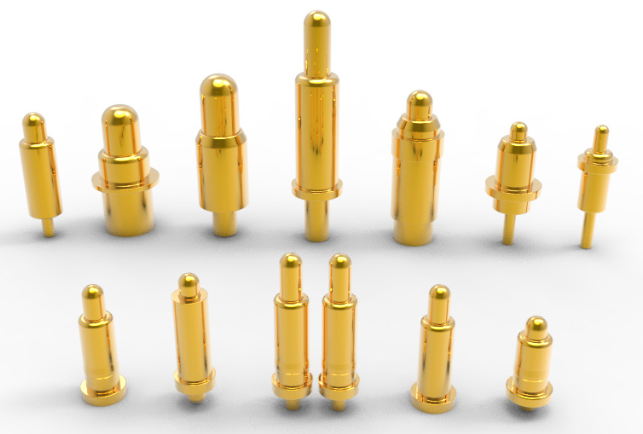
Mill-Max has long been a recognized name in the pogo pin industry, offering reliable spring-loaded connectors for a wide range of applications, from consumer electronics to industrial equipment. However, as businesses look to optimize costs without compromising on performance, many are seeking alternative solutions that can match Mill-Max’s functionality while delivering significant savings. This is where Cnomax, a leading manufacturer of precision connectors, steps in. Cnomax’s pogo pins are designed to be direct replacements for Mill-Max models, ensuring seamless integration into existing systems. In this article, we will guide you through how to replace Mill-Max pogo pins with Cnomax alternatives, highlight Cnomax’s key advantages, and explain why countless customers have already made the switch to cut costs without sacrificing quality.
1. Why Replacing Mill-Max Pogo Pins with Cnomax Is a Viable Choice
Before diving into the replacement process, it is crucial to understand why Cnomax pogo pins are a reliable substitute for Mill-Max. The first and most important factor is functional parity. Cnomax has invested heavily in research and development to ensure its pogo pins meet or exceed the performance specifications of Mill-Max models. This includes critical parameters such as contact resistance, current-carrying capacity, mating cycles, and environmental resistance. For example, Mill-Max’s popular 0850-0-15-15-08-27-10-0 pogo pin has a contact resistance of less than 20 milliohms, a current rating of 3 amps, and a mating cycle life of 10,000 cycles. Cnomax’s equivalent model, CN-0850-0-15-15-08-27-10-0, matches these specifications exactly—ensuring that devices using the replacement pin will perform just as well as those with the original Mill-Max part.
Another key reason for the viability of the replacement is dimensional compatibility. Cnomax’s pogo pins are engineered to have identical physical dimensions to Mill-Max models, including pin length, barrel diameter, spring force, and mounting options. This means there is no need to modify PCBs (printed circuit boards), housings, or assembly processes when switching from Mill-Max to Cnomax. For instance, if a manufacturer is using Mill-Max’s 3100 series pogo pins in a test fixture, they can simply swap them out for Cnomax’s CN-3100 series without retooling or redesigning the fixture. This eliminates the risk of delays or additional costs associated with design changes, making the replacement process quick and hassle-free.
2. Step-by-Step Guide to Replacing Mill-Max Pogo Pins with Cnomax
Replacing Mill-Max pogo pins with Cnomax alternatives is a straightforward process that can be completed in a few simple steps. Whether you are a manufacturer integrating pogo pins into new products or a maintenance team replacing worn parts in existing equipment, following these steps will ensure a smooth transition.
Step 1: Identify the Mill-Max Model and Find the Corresponding Cnomax Part
The first step is to identify the exact Mill-Max pogo pin model you are using. This information can be found on the product datasheet, the part label, or the Bill of Materials (BOM) for your product. Once you have the model number, visit Cnomax’s official website or contact their customer support team to find the equivalent Cnomax part. Cnomax maintains a comprehensive cross-reference guide that lists Mill-Max model numbers alongside their Cnomax counterparts. For example, Mill-Max’s 0390-0-15-15-08-27-10-0 corresponds to Cnomax’s CN-0390-0-15-15-08-27-10-0, and Mill-Max’s 1145 series matches Cnomax’s CN-1145 series. This guide takes the guesswork out of finding the right replacement and ensures that you select a part that meets all your technical requirements.
Step 2: Verify Specifications and Conduct a Sample Test
Before placing a bulk order, it is essential to verify the specifications of the Cnomax part and conduct a sample test. Request a small number of Cnomax pogo pins (typically 5–10 samples) from the company and compare them to the Mill-Max pins you are currently using. Check key parameters such as physical dimensions (using calipers or a micrometer), spring force (with a force gauge), and electrical performance (using a multimeter to measure contact resistance). You should also test the pogo pins in your actual application to ensure they integrate seamlessly and perform as expected. For example, if you are using pogo pins in a smartphone charging port, test the Cnomax pins for charging speed, signal transmission, and durability over multiple insertion cycles. This step helps you confirm that the Cnomax part is a true match for the Mill-Max model and avoids any potential issues in mass production.
Step 3: Update Your BOM and Notify Your Supply Chain
Once you are satisfied with the performance of the Cnomax samples, update your BOM to replace the Mill-Max model number with the corresponding Cnomax part number. This ensures that your procurement team orders the correct parts moving forward. It is also important to notify your supply chain partners, such as contract manufacturers or distributors, about the switch. Cnomax works closely with a global network of distributors, so your existing suppliers may already stock Cnomax products—or can easily source them. This minimizes disruptions to your production schedule and ensures a steady supply of pogo pins.
Step 4: Implement the Replacement in Production
The final step is to implement the replacement in your production process. Since Cnomax pogo pins are dimensionally identical to Mill-Max models, no changes to your assembly line or equipment are needed. Simply replace the Mill-Max pins with Cnomax pins in your production workflow. For example, if your assembly line uses automated machines to insert pogo pins into PCBs, the Cnomax pins will fit into the same machine fixtures and require the same insertion force as the Mill-Max pins. This means you can start using the Cnomax parts immediately without any downtime or retraining for your staff.
3. Key Advantages of Cnomax Pogo Pins Over Mill-Max
Cnomax’s pogo pins offer several key advantages over Mill-Max, making them an attractive choice for businesses looking to reduce costs without compromising on quality. These advantages have been validated by numerous customers across industries, from consumer electronics to medical devices.
3.1 Significant Cost Savings
One of the most compelling reasons to switch to Cnomax is the cost savings. Cnomax’s pogo pins are typically 20–35% cheaper than equivalent Mill-Max models. This is due to Cnomax’s optimized manufacturing processes, efficient supply chain management, and lower overhead costs compared to larger, more established brands like Mill-Max. For example, a manufacturer that uses 100,000 Mill-Max 0850 series pogo pins per month at a cost of \(0.50 per pin would spend \)50,000 per month. Switching to Cnomax’s CN-0850 series, which costs \(0.35 per pin, would reduce monthly costs to \)35,000—a savings of \(15,000 per month, or \)180,000 per year. These savings can be reinvested into other areas of the business, such as R&D or marketing, or passed on to customers to increase competitiveness.
3.2 High-Quality Materials and Manufacturing
Despite the lower cost, Cnomax does not compromise on quality. The company uses the same high-grade materials as Mill-Max, including phosphor bronze for pin bodies, beryllium copper for springs, and gold or palladium-nickel plating for contacts. Cnomax also adheres to strict quality control standards throughout the manufacturing process, from raw material inspection to final product testing. All pogo pins undergo rigorous testing for contact resistance, spring force, dimensional accuracy, and environmental resistance (including salt spray and temperature cycling tests). This ensures that Cnomax’s products are just as reliable and durable as Mill-Max’s—with many customers reporting that Cnomax pins have a longer lifespan in real-world applications.
3.3 Flexible Customization Options
Cnomax offers greater flexibility in customization compared to Mill-Max. While Mill-Max has a wide range of standard products, customizing their pogo pins can be expensive and time-consuming (with lead times of 4–6 weeks or more). Cnomax, on the other hand, specializes in fast, cost-effective customization. Whether you need a pogo pin with a specific plating thickness, spring force, or mounting option, Cnomax can deliver a custom solution in 2–3 weeks at a fraction of the cost of Mill-Max’s custom parts. This is particularly beneficial for businesses with unique application requirements, such as medical devices that need biocompatible plating or industrial equipment that requires high-temperature resistance.
3.4 Responsive Customer Support
Cnomax prides itself on providing responsive, customer-centric support. Unlike larger companies like Mill-Max, where customers may have to wait days for a response to their inquiries, Cnomax’s customer support team typically responds within 24 hours. The team includes experienced engineers who can help with technical questions, such as selecting the right pogo pin for your application or troubleshooting integration issues. Cnomax also offers fast lead times for standard products (usually 3–5 business days) and provides regular updates on order status, ensuring that you always know when your parts will arrive. This level of support has earned Cnomax a reputation for reliability and trustworthiness among its customers.
4. Customer Recognition: Why Businesses Choose Cnomax
Cnomax’s commitment to quality, cost savings, and customer support has earned it the trust of numerous businesses around the world. From small startups to large multinational corporations, customers across industries have switched to Cnomax and seen positive results.
For example, a leading manufacturer of IoT devices was using Mill-Max pogo pins in its wireless sensors but was struggling with high costs. After switching to Cnomax’s equivalent pins, the company reduced its connector costs by 28% while maintaining the same level of performance. The manufacturer also praised Cnomax’s fast lead times, which helped them avoid production delays during peak demand periods.
Another customer, a medical device company, needed a custom pogo pin with biocompatible plating for a new diagnostic tool. Mill-Max quoted a lead time of 8 weeks and a high custom fee, but Cnomax delivered the custom pins in 3 weeks at half the cost. The medical device company reported that the Cnomax pins met all regulatory requirements and performed flawlessly in clinical trials.
These success stories are not unique. A recent survey of Cnomax customers found that 92% reported being satisfied or very satisfied with the quality of Cnomax’s pogo pins, and 87% said they had achieved significant cost savings by switching from Mill-Max. Additionally, 95% of customers said they would recommend Cnomax to other businesses looking for a cost-effective pogo pin solution.
5. Cnomax Conclusion
Replacing Mill-Max pogo pins with Cnomax alternatives is a smart, cost-effective choice for businesses looking to optimize their budgets without compromising on performance. Cnomax’s pogo pins offer functional parity and dimensional compatibility with Mill-Max models, making the replacement process quick and seamless. With significant cost savings (20–35%), high-quality materials, flexible customization options, and responsive customer support, Cnomax has become a trusted partner for businesses across industries.
Whether you are a manufacturer looking to reduce production costs, a maintenance team needing a reliable replacement for worn Mill-Max pins, or a startup seeking an affordable connector solution, Cnomax has the right pogo pin for your needs. By following the simple steps outlined in this article, you can easily switch to Cnomax and start enjoying the benefits of lower costs, higher quality, and better customer support. Join the thousands of businesses that have already made the switch—you won’t be disappointed.

 WhatsApp:+8613652508770