What plating process is suitable for the surface of Pogo Pin?
The selection of a suitable surface plating process for Pogo pins requires a comprehensive consideration of many factors such as electrical properties, mechanical properties, working environment and cost budget. The following is a detailed analysis of the
Pogo Pin surface plating process selection:
I. Overview of electroplating process
Electroplating is the process of plating a thin layer of metal or alloy on a metal surface using the principle of electrolysis. By electroplating, a coating with specific properties can be formed on the surface of the Pogo Pin, thereby improving its electrical conductivity, corrosion resistance, wear resistance and other properties.
Second, Pogo Pin surface plating process selection
Step 1 Gold plating
Advantages:
• Excellent electrical conductivity: Gold is one of the most conductive metals at room temperature, and gold plating can significantly reduce the contact resistance of Pogo pins, improving the quality and stability of signal transmission.
• Good corrosion resistance: Gold has good chemical stability and is not easy to react with other substances, so the gold-plated layer can effectively prevent the corrosion of Pogo Pin in harsh environments such as moisture and salt spray.
• Excellent wear resistance: The gold layer has moderate hardness and good wear resistance, which can extend the service life of Pogo Pin.
• Beautiful appearance: Gold has a golden luster, gold-plated Pogo Pin appearance is more beautiful.
Cons:
• Higher cost: Due to the rarity and high value of gold, the cost of the gold-plating process is relatively high.
Application scenario:
• Occasions requiring very high electrical performance, such as high-frequency signal transmission, precision instrument connection, etc.
• Places that require long-term exposure to harsh environments, such as outdoor equipment, Marine equipment, etc.
2. Silver plating
Advantages:
• Good electrical conductivity: Silver is second only to gold in electrical conductivity, and silver plating can also significantly reduce the contact resistance of Pogo pins.
• Lower cost: The cost of silver plating is lower compared to gold plating.
Cons:
• Easy oxidation: Silver oxidizes easily in air, forming black silver oxide, which affects appearance and conductivity. Therefore, the Pogo Pin after silver plating requires a special surface treatment, such as passivation treatment, to improve its oxidation resistance.
• Poor wear resistance: Silver has low hardness and poor wear resistance, and long-term insertion and removal may lead to coating wear.
Application scenario:
• Where the electrical performance is required to be high, but the cost is limited.
• Used in indoor environment, and the number of insertions is not many occasions.
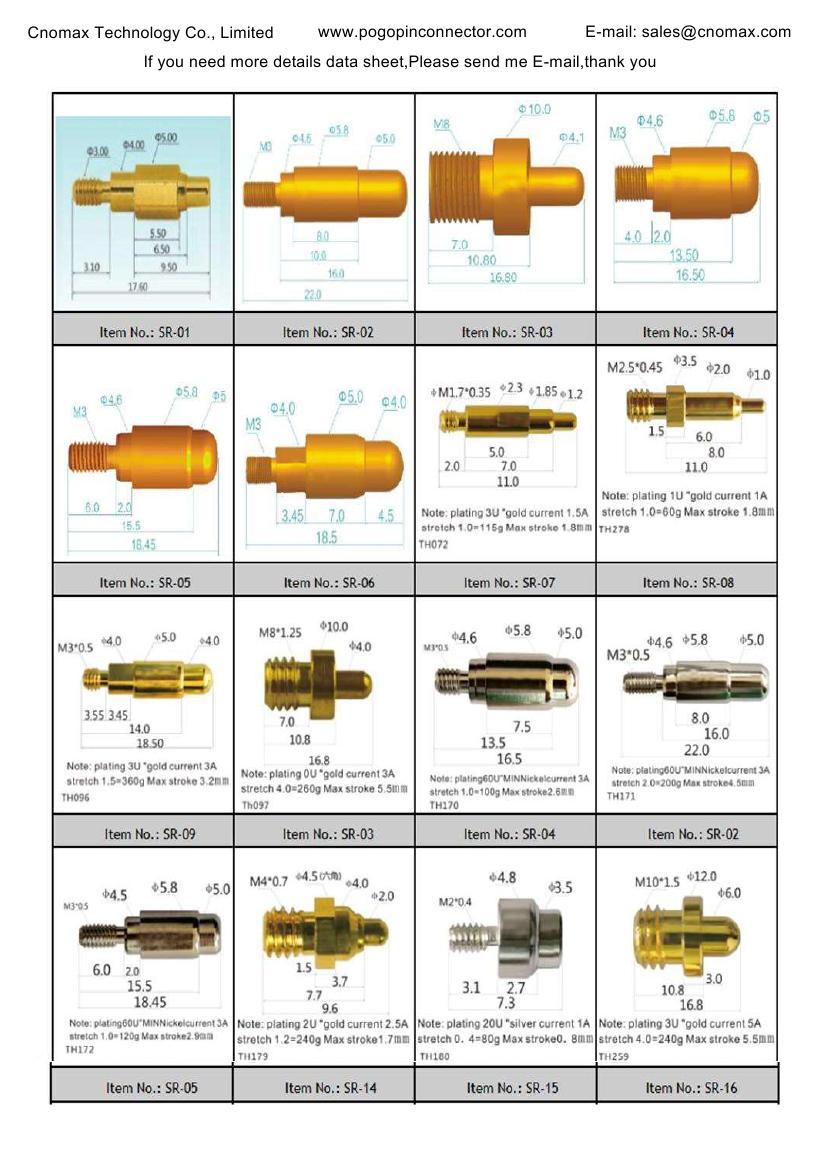
3. Nickel plating
Advantages:
Good corrosion resistance: Nickel has good chemical stability and is not easy to be oxidized and corroded. The nickel plating layer can effectively prevent the corrosion of Pogo Pin in harsh environments such as moisture and salt spray.
• High hardness: The hardness of nickel is high, and the nickel plating layer can improve the wear resistance of Pogo Pin.
• Lower cost: The cost of nickel plating is lower compared to gold plating and silver plating.
Cons:
Poor electrical conductivity: Compared to gold and silver, nickel is poor in electrical conductivity and may increase the contact resistance of the Pogo Pin.
Application scenario:
• Occasions where the electrical performance requirements are not particularly high, but there are high requirements for corrosion resistance and wear resistance.
• Cost-sensitive situations.
4. Other electroplating processes
In addition to gold plating, silver plating and nickel plating, there are a number of other plating processes that can be used for the surface treatment of Pogo pins, such as chrome plating, zinc plating, copper plating and so on. Each of these processes has advantages and disadvantages, and the selection needs to be balanced according to the specific application scenario and performance requirements.
• Chrome plating: has very high hardness and wear resistance, but the cost is high and the environmental pollution is large.
• Galvanizing: has good corrosion resistance and low cost, but poor electrical conductivity.
• Copper plating: good electrical conductivity, but easy oxidation and corrosion, usually used as a base coating.
Third, the selection principle of electroplating process
1. Select according to electrical performance requirements: for occasions with high electrical performance requirements, gold plating or silver plating is preferred; Where the electrical performance requirements are not particularly high, nickel plating or other electroplating processes can be considered.
2. Select according to the working environment: Pogo Pin used in humid, salt spray and other harsh environments needs to choose a plating process with good corrosion resistance, such as gold plating, nickel plating and so on.
3. Choose according to the cost budget: in cost-sensitive occasions, it is necessary to choose a lower cost electroplating process, such as nickel plating, galvanized, etc.
4. Comprehensive consideration of various factors: When selecting the electroplating process, it is necessary to comprehensively consider multiple factors such as electrical performance, working environment, cost budget and processing difficulty to select the most suitable electroplating process.
Iv. Conclusion
Selecting the right surface plating process for Pogo pins is a complex process that requires a combination of factors. In actual applications, you can weigh and select based on specific application scenarios and performance requirements. At the same time, with the continuous development of electroplating technology, new electroplating processes and coating materials continue to emerge, providing more options for the surface treatment of Pogo Pin.
 WhatsApp:+8613652508770